Manual Lease File Audits vs. Automated Lease Auditing

Hayley Annichiarico
Marketing Manager
Key takeaways
- Manual lease audits work for small portfolios but get harder to manage as volume grows.
- Outsourcing manual audits solves the volume problem but adds cost and can take days or weeks to complete.
- Automated auditing connects to your property management system and continuously reviews every unit.
- The right approach depends on your portfolio size, how often errors come up, and how much staff time you can put toward it.
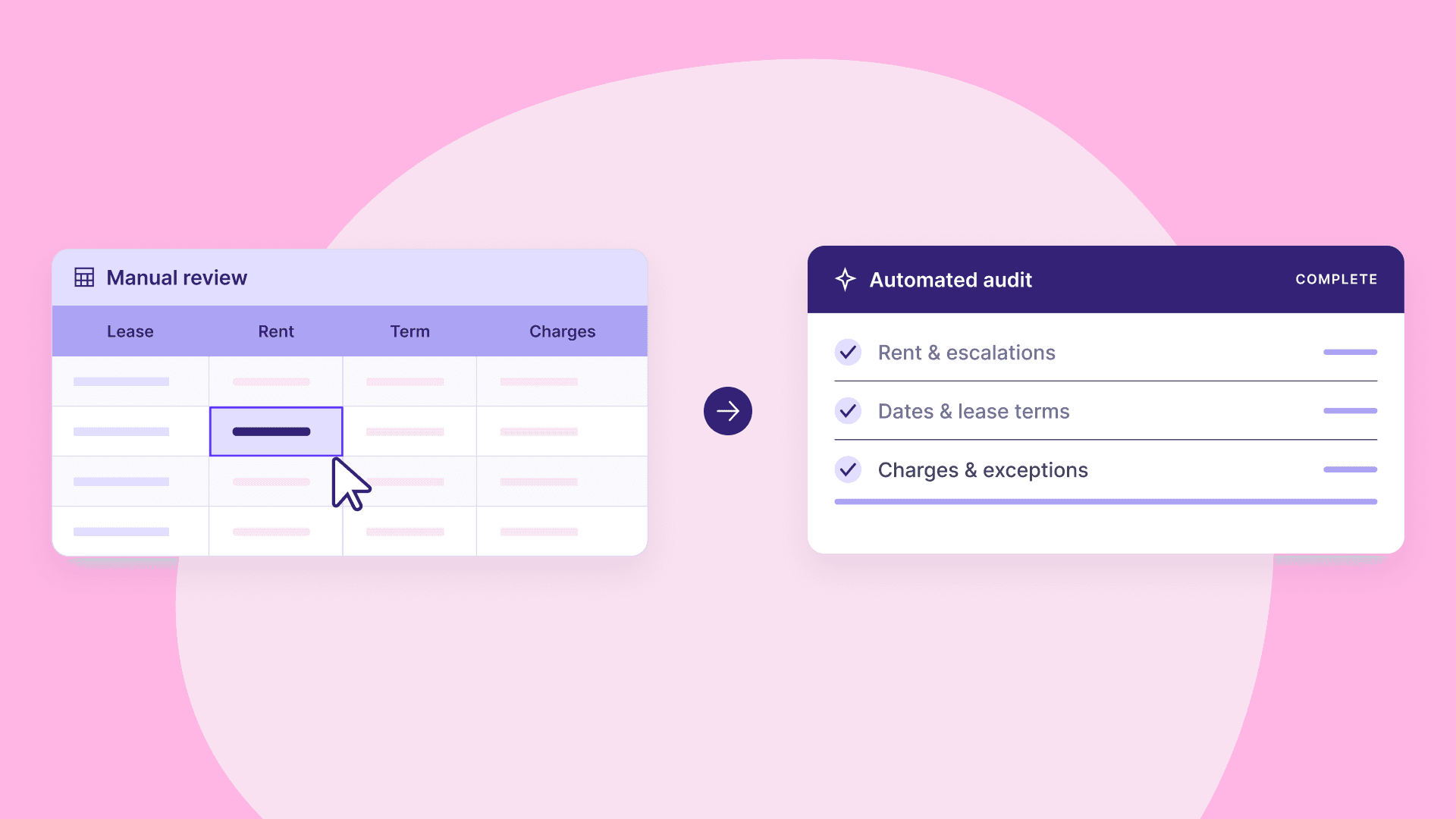
Both manual and automated lease file audits have the same goal: make sure what's in your signed leases matches what's in your rent roll. The difference is how they get to the finished audit, how long it takes, and how much of your portfolio gets reviewed.
If you're weighing the two, here's how each one works.
How Manual Lease Audits Work
A manual audit starts like any audit: your team pulls reports from your property management system, specifically the rent roll, resident ledger, and charge history. Once you have all your files, a member of your team (or a third party) compares those against the actual lease documents and logs anything that doesn't match.
Doing it in-house takes a significant chunk of your team's time and effort. Outsourcing to a third party is a waiting game you pay for and hope it turns around quickly.
The honest reality is that manual audits take time your team may not have, especially during busy leasing periods.
Where Manual Audits Fall Short
One of the biggest downsides of manual audits is the amount of time it takes. When time runs short, so does coverage, causing teams to pick and choose what to audit. Manual lease audits will catch obvious discrepancies, but when you're short on time, it's easy to skip lower-risk fields like parking fees or expired concessions.
Consistency is the other problem. Manual audits depend on someone having the time to do them. During a busy leasing season or after a staff change, they get deprioritized, shortened, or skipped. When that happens, errors from that period are missed until the next review, which might be until next year.
For teams that need full, consistent coverage, outsourcing is the usual choice. Third-party audit firms can review every file, but it's costly and takes time. A single property audit can take weeks, depending on the portfolio's size and state of the files.
How Automated Lease Auditing Works
Automated lease auditing software connects to your property management system and your lease documents. Instead of someone pulling reports and comparing them manually, the software compares automatically across every unit and flags anything that doesn't match.
The speed difference is significant. A review that would take an outside firm weeks runs in hours. Since automated auditing runs continuously rather than on a set schedule, issues get caught closer to when they happen, not weeks or months later during the next planned review.
It's also less expensive. Manual outsourcing has a per-audit cost that adds up across properties, or the number of leases being audited. Automated software has a recurring cost, but it covers the full portfolio on an ongoing basis. For most operators past a certain size, the math favors automation.
Another big difference is depth. A manual audit reviews what someone has time to check, which is usually a sample. Automated auditing reviews every unit, every form, and every field without skipping anything because the leasing season is busy or staffing is short.
What to Consider When Choosing
A few factors come into play when deciding the best way to audit your leases. Portfolio size is one of the first factors. For owners or operators managing under 100 units with a stable team, a regular manual audit is a reasonable starting point. But this will change as the portfolio grows, especially when taking on new acquisitions with numerous leases to audit.
Leasing rates play a part too. A lease-up or high turnover season means more new leases, renewals, and chances for a missed step at signing. The higher the lease activity volume, the harder it is to keep up manually.
Staff capacity is the practical constraint. Manual audits take real time. If your team is stretched, the audit either gets skipped or done inconsistently, which means errors compound between reviews.
If portfolio size, turnover, and staff capacity are all pointing in the same direction (more units, more lease activity, and a team that's already stretched), the manual process is probably already leading to missed revenue opportunities.
Getting Started
If your manual process is working, the question isn't whether to switch. It's whether the same approach will still work as your portfolio grows.
Pivott's Lease Auditor connects to your property management system and lease creation software, reviews every lease against your rent roll and default lease expectations, and flags discrepancies your team can act on without scheduling a project. For most portfolios, the first audit surfaces more than people expect. If you want to know what's in yours, that's where to start.
Ready to automate?
See how Pivott helps multifamily teams manage contracts, compliance, and vendor documents in one place.
Book a Demo