
Contracts are the backbone of multifamily operations. Yet for many operators, those contracts live in shared drives, inboxes, or filing cabinets, making it nearly impossible to understand what’s actually in them.
This is where AI contract data extraction is changing the game. With recent advances in optical character recognition (OCR) and large language models (LLMs), multifamily operators now have access to new software tools.
Multifamily operators can unlock critical data buried inside contracts using AI, but only if it’s implemented correctly.
In this post, we’ll break down how AI-powered contract data extraction works, where it still falls short, and why simply extracting data from your files isn’t enough without a proper contract management platform behind it.
At its core, contract data extraction is about turning unstructured documents into usable data. Historically, this meant manual review: someone opening a contract, reading the entire thing, hunting for clauses, and copying details into complex spreadsheets that are difficult to maintain.
AI changes that.
Modern AI systems can scan contracts and automatically extract key information such as:
For multifamily operators managing hundreds or thousands of contracts, AI-powered processes can shift contract review from a reactive task (like during acquisition or disposition) to a scalable, proactive process.
Two major technology breakthroughs make AI contract data extraction possible today:
While Optical Character Recognition (OCR) technology has existed for decades, its capabilities have significantly improved in recent years. Modern OCR can accurately convert scanned files (even older or poorly formatted ones) into machine-readable text.
This is especially important in multifamily, where contracts can be in any format, from a clean, e-signed PDF to a blurry picture of coffee-stained receipt.
If OCR fails, everything downstream, from clause detection to renewals and reporting, breaks.
LLMs go a step further. Instead of just reading text, they understand context and intent. This is where contract data extraction moves from basic digitization to real analysis.
For example, an LLM can:
This matters in multifamily because contracts rarely follow a clean template. Two agreements might say the same thing using completely different language.
LLMs make sense of that variation. They don’t just look for keywords, they interpret meaning in context. Without LLMs, operators are stuck with brittle rules and manual reviews. With them, contracts can finally be understood at scale.
Despite the progress, AI is not magic.
Contract data extraction comes with real roadblocks. Our team is very familiar with these challenges, having processed tens of thousands of multifamily contracts this year.
LLMs can sometimes “hallucinate,” meaning they confidently produce answers that are incorrect or not explicitly stated in the contract. In a legal or financial context, this is a serious risk.
Prompt engineering can become a full-time job if you’re not careful. Bigger, more powerful models don’t eliminate complexity, they add to it.
Multifamily contracts vary widely in structure and language. For instance, a model and prompt that works well on marketing agreements may struggle with utility contracts or pool permits.
Context and document structure are important as well. If you use a standard internal template and attach vendor agreements as exhibits, for example, LLMs need to know that the signatures in the template section are the ones that matter, not the exhibits at the very end.
Extracting data consistently across thousands of contracts requires:
Without these safeguards, operators end up with inconsistent or unreliable outputs. This defeats the purpose of automation in the first place.
Extracting data from contracts is not something you want to be doing off the side of your desk or for a weekend project.
When done right, extracting data from multifamily contracts unlocks far more than convenience; it gives operators visibility into risk, cost, and accountability across their entire portfolio.
AI-powered extraction surfaces critical clauses that often go unnoticed until it’s too late: auto-renewals, early termination penalties, exclusivity clauses, and liability provisions.
For example, missing a single telecom or bulk services renewal can lock a property into 2, 5, or even 10+ year terms with limited exit options. Multiply that risk across dozens or hundreds of communities, and small oversights quickly become large problems.
By structuring contract data, teams can proactively identify which agreements deserve attention before renewal notices are missed or penalties are triggered.
One of the most overlooked benefits of contract data extraction is identifying agreements that are missing, expired, or unsigned.
In practice, this often looks like:
These situations create legal ambiguity, financial risk, and operational confusion. This is especially true when properties are up for sale and you’re trying to review files.
Extracting data is only valuable if it’s accessible. When contract data is centralized, teams across property operations, maintenance, marketing, finance, and leadership gain a shared source of truth.
Instead of chasing documents or relying on intrinsic knowledge, teams can quickly understand:
This reduces internal friction, shortens decision-making cycles, and frees teams to focus on higher-value work instead of document hunting.
Managing contracts for a complex enterprise organization is only the first step. Once data is extracted, the next step is providing your teams with the necessary tools to actively manage the contracts relevant to their functional areas, driving measurable action.
Once data is extracted, it must be standardized. Dates, dollar amounts, vendors, and clauses need consistent formats so they can be analyzed and tracked.
When contract data is linked to spend and GL records, operators gain real financial visibility:
The most overlooked value comes from operationalizing your contracts.
Community and Regional Managers are often responsible for vendor relationships, but contract management is never their primary job. These teams need to somehow keep on top of:
This is how organizations avoid missed deadlines, unwanted renewals, and costly penalties.
But, how can we ensure that everyone is actioning items in consistent and repeatable ways across portfolios?
AI contract extraction works best when it’s part of a broader system.
A true contract management platform combines:
Without this foundation, AI becomes a risky experiment rather than a reliable operational tool.
Pivott was built specifically for multifamily contract management. Today, Pivott helps multifamily operators manage tens of thousands of contracts across thousands of communities.
We use AI-powered contract data extraction through a custom model workflow purpose-built for real-world multifamily contracts. With our SOC II attestation, you can be sure that your data remains secure and private.
Our platform combines AI with supporting tools that ensure accuracy and actionability, including:
By pairing AI with human oversight and purpose-built infrastructure, Pivott helps operators move from data to insight to action.
AI has made it possible to finally unlock the data trapped inside multifamily contracts, but extraction alone isn’t enough. Accuracy, consistency, and action matter just as much as automation.
For multifamily operators looking to reduce risk, control spend, and avoid costly contract mistakes, the real solution lies in a contract management platform built to support AI.
If you’re ready to bring all your contracts into one place and turn them into actionable insights, Pivott can help.
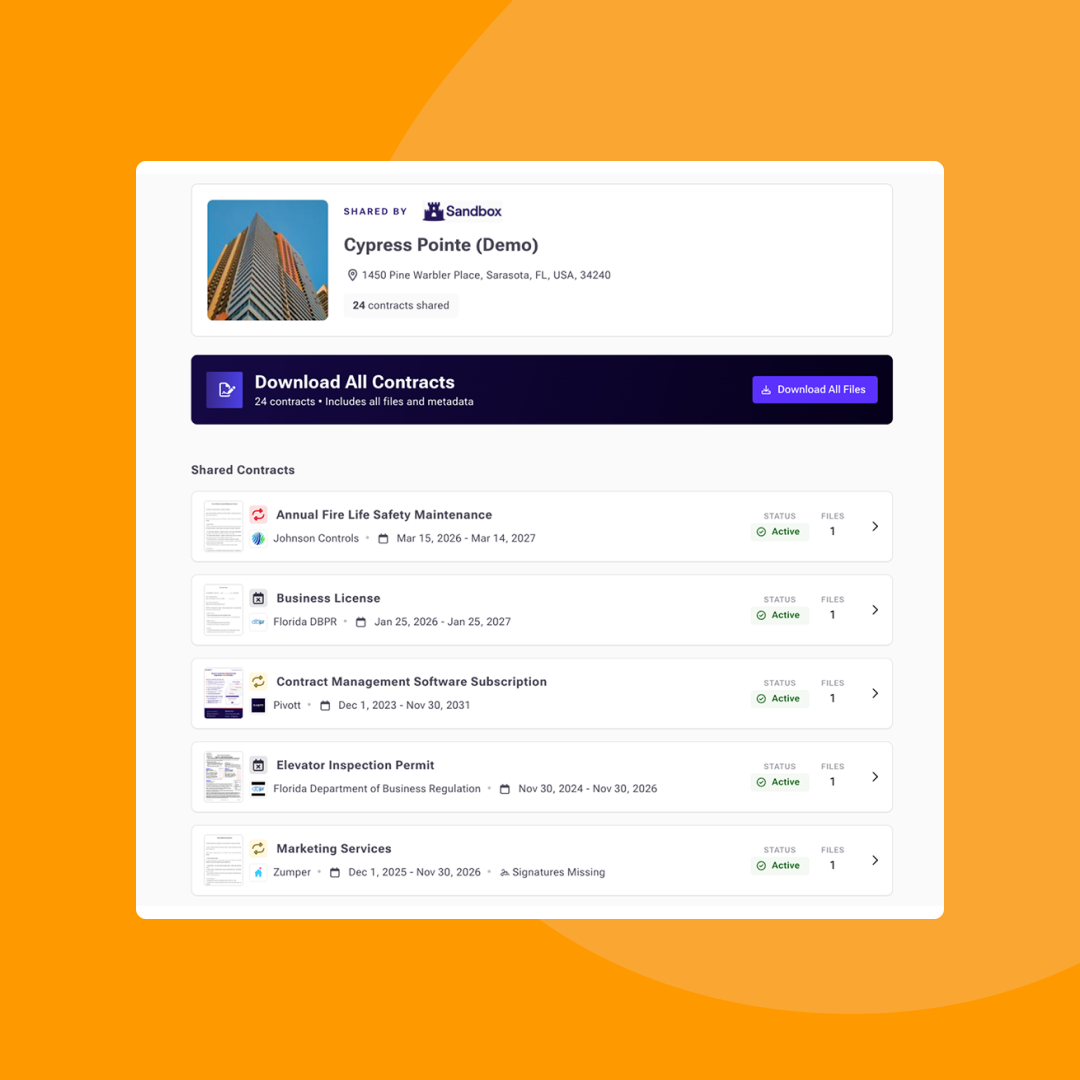
Sign up for FREE or try out our Sandbox demo environment to see how Pivott AI helps reduce contract risk and prevent missed renewals.


.png)